If you’re looking for a fresh, colorful, and satisfying salad that actually feels like a full meal, this Tomato Cucumber Feta Salad with Fruit and Bell Pepper is exactly that kind of recipe. Some salads sit quietly beside the main meal, and then some salads become the meal itself. This creamy feta fruit salad belongs firmly in the second category. With juicy grapefruit or orange, sweet pear, crisp vegetables, and generous scoops of soft feta cheese, every bite brings together a surprising balance of flavors. The sweetness of fruit meets salty creaminess, bright acidity cuts through the richness, and fresh vegetables add crunch and freshness throughout.
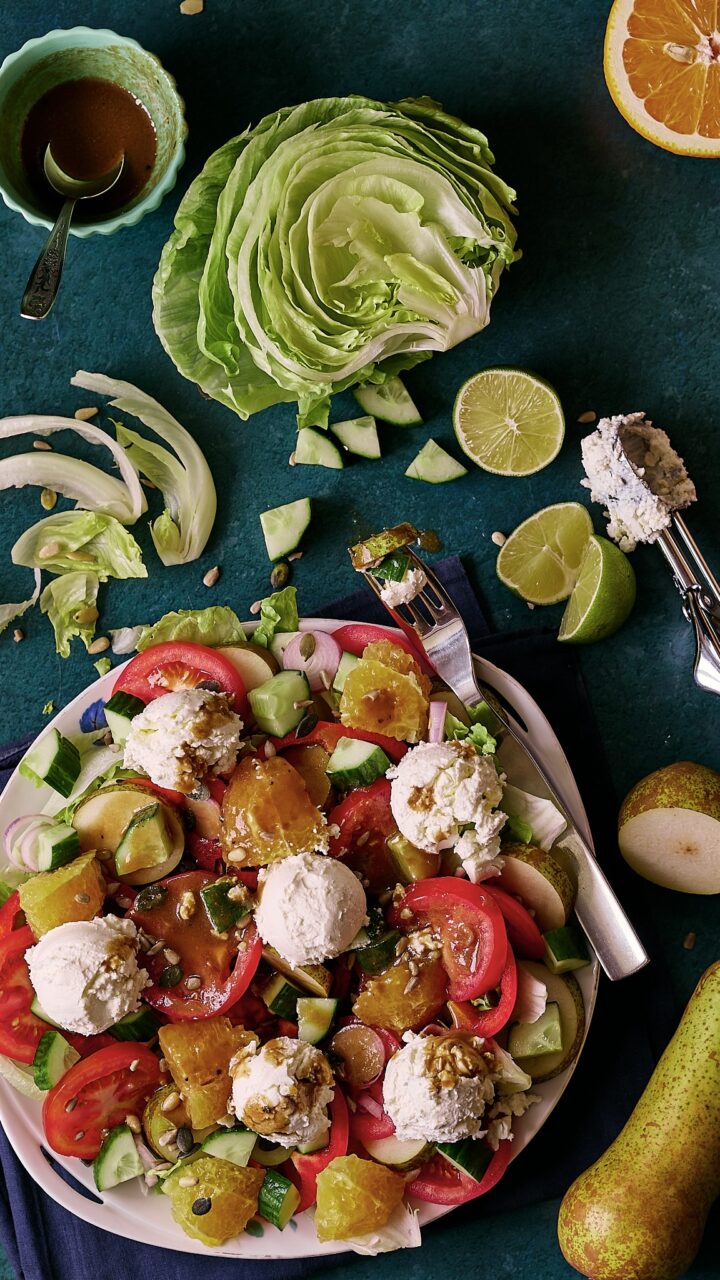
What I love most about this salad is how complete it feels. Instead of relying on a single dominant flavor, it offers a little bit of everything: sweet, savory, tangy, bitter, fresh, and umami because of the Miso paste and Fish sauce. It’s the kind of dish that leaves you feeling nourished rather than merely full. The large scoops of creamy feta transform an ordinary salad into something that feels special enough for entertaining yet simple enough for a weekday lunch. What really ties this tomato, cucumber, and feta salad together is the Miso dressing. Instead of a heavy oil-based vinaigrette, the salad relies on a lighter, tangy dressing that lets the vegetables and fruit stay bright while the creamy feta naturally melts into everything as it sits. The feta essentially replaces the need for extra oil, adding richness and body without weighing the salad down.
Why You’ll Love This Creamy Feta Ball Salad with Pear and Citrus
This is not just another tomato cucumber salad with feta. The addition of fruit and sweet bell pepper, combined with a lighter Asian-style dressing approach, makes it more vibrant, more complex, and more satisfying than a traditional version. It’s the kind of salad you can serve for lunch, bring to a summer table, or adapt into a winter version with small seasonal swaps.
Ready with simple, everyday ingredients
Beautiful enough for entertaining guests
Naturally rich and satisfying without needing heavy dressing
Packed with contrasting flavors and textures
Easy to adapt for different seasons
Works as a light main course or a substantial side dish
The combination may sound unusual at first, but salty cheese and sweet fruit have been paired together throughout Mediterranean cooking for generations. Once you taste the creamy feta alongside juicy grapefruit or orange and ripe pear, the pairing makes perfect sense.
The Secret Is Using Soft Feta
The star ingredient in this recipe is soft, creamy feta-style cheese. The product depends on the country you live in. Mine, for example, is from Germany:
Fitaki Cheese.
The important part is that it should be creamier and more scoopable than the regular original Greek Feta cheese. I found a bunch of products all over that should also work:
Meze Foods Soft Feta Cheese
İçim Soft UF Feta Cheese
Paleo Robbie Organic Soft Feta
These are just examples from different locations to give you the idea of which product to look for. It should be soft, creamy Feta, rather than a more solid block-style Feta.
Unlike traditional block feta, which tends to be crumbly and firm, soft feta has a smoother, more spreadable texture. This allows you to create beautiful scoops or balls of cheese that sit on top of the salad, almost like clouds. Every forkful picks up a little bit of the creamy cheese, creating a luxurious texture that coats the fruit and vegetables.
If soft feta isn’t available where you live, don’t worry. You can substitute:
- Traditional feta cut into large cubes
- Whipped feta
- Cream cheese mixed with Greek yogurt and a little extra salt and lemon or lime juice
- A creamy sheep’s milk cheese
The exact product matters less than achieving a rich, creamy element that balances the fresh produce.
How to Make Tomato Cucumber Feta Salad with Fruit and Bell Pepper – A Salad That Works in Every Season
Although I first made this salad during the warmer months, it quickly became one of my favorite winter salads as well.
For summer, I love using juicy grapefruit, colorful tomatoes, and crisp romaine lettuce. The flavors feel refreshing and vibrant on hot days. I also swapped shallots for red onion, which I soaked in red wine vinegar. Shallots, though, don’t need soaking to get the flavor milder – they’re already delicate enough.
Here’s my video of the summer recipe version:
Do You Always Need Oil in the Dressing?
One of the things that surprised me most about this salad is that it doesn’t really need olive oil. In earlier versions, I used a traditional vinaigrette with oil, but over time, I found myself leaving it out completely.
The generous amount of creamy feta already provides richness and body. Once the cheese begins to mingle with the dressing and fresh fruit juices, the salad develops plenty of luxurious texture on its own.
During winter or other colder seasons, I often make a few simple swaps. Orange segments replace the grapefruit, iceberg lettuce adds extra crunch, and mild shallots take the place of marinated onions.
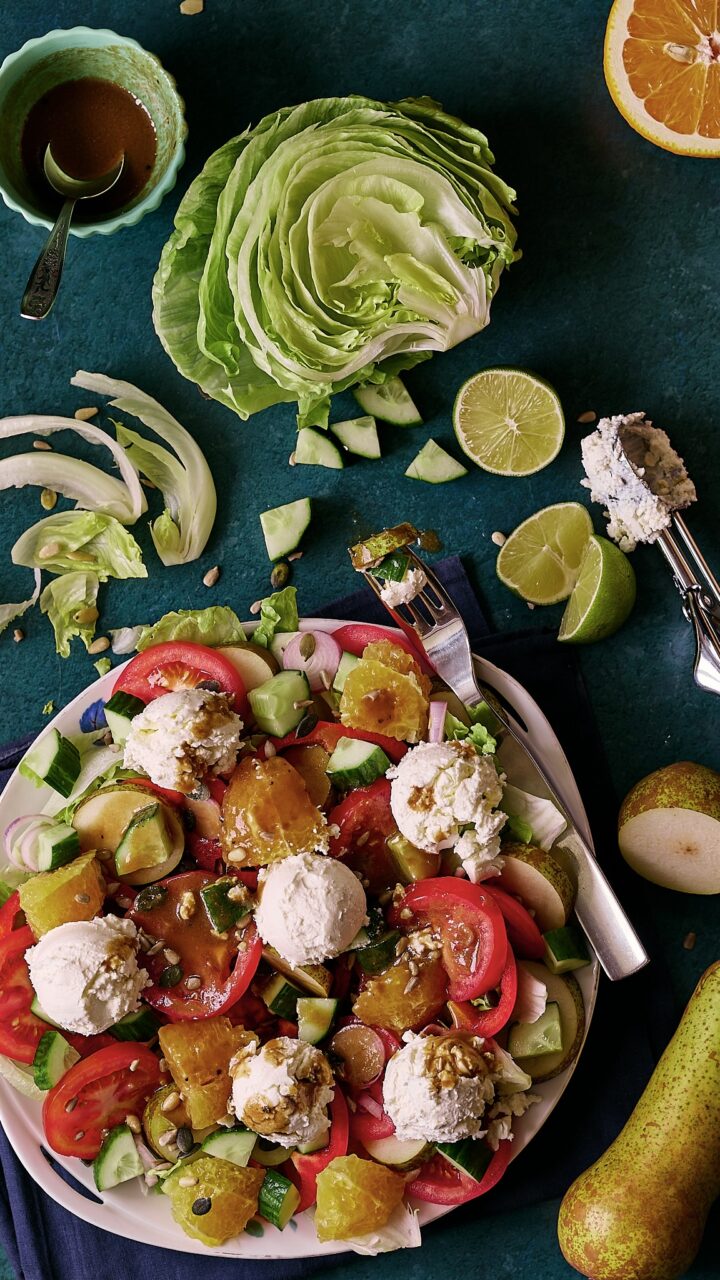
The creamy feta scoops scattered across the top always remind me of little snowballs, making the winter version especially beautiful for holiday gatherings and festive tables.
Because the foundation of the recipe remains the same, you can easily adapt it using whichever fruits and vegetables are at their seasonal best.
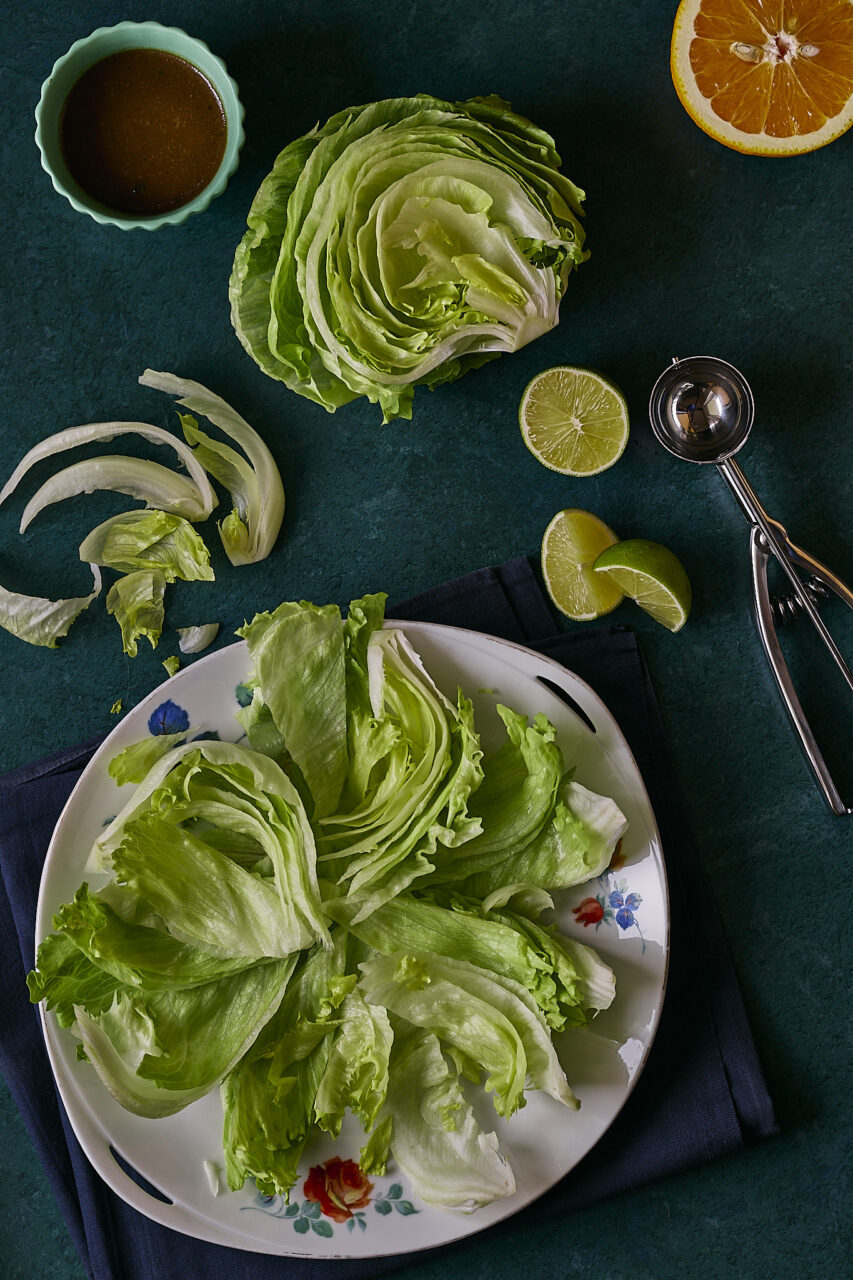
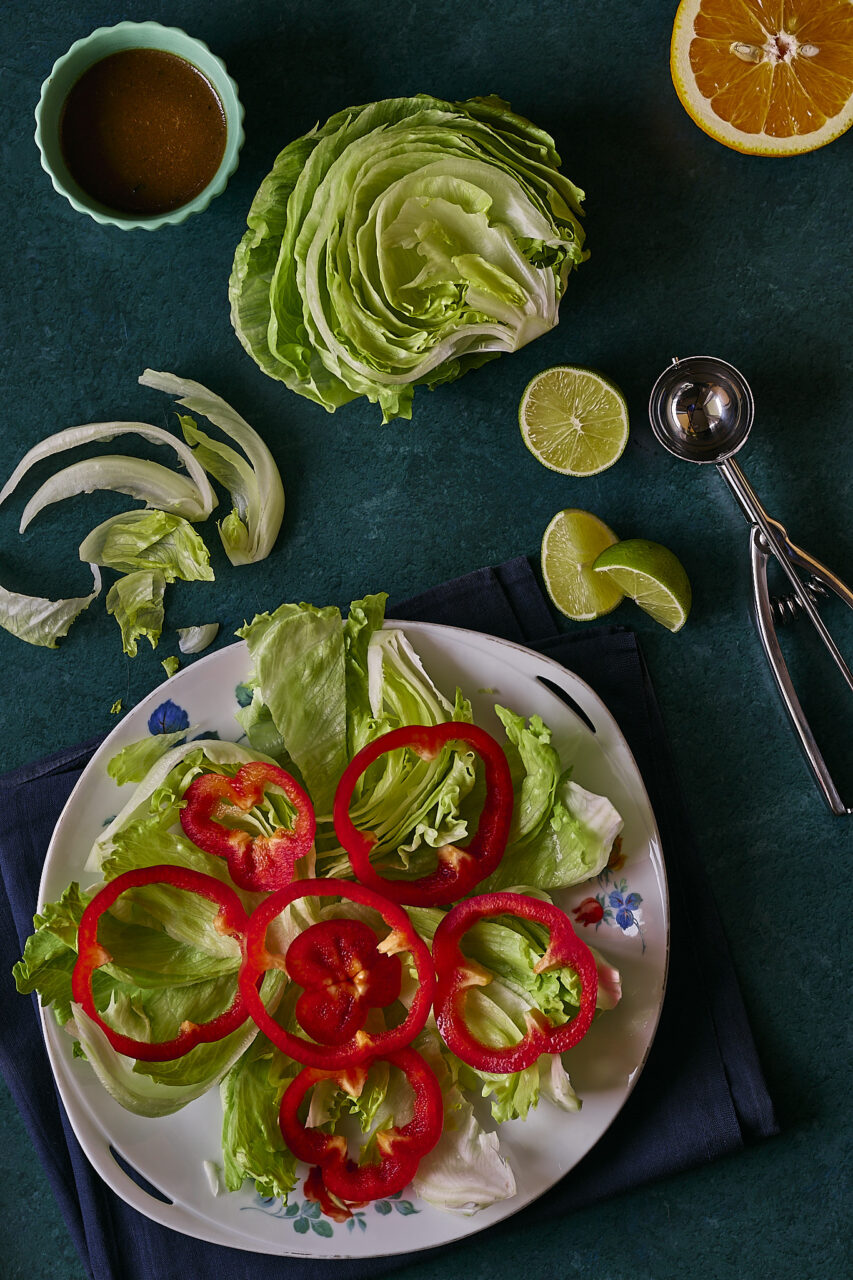
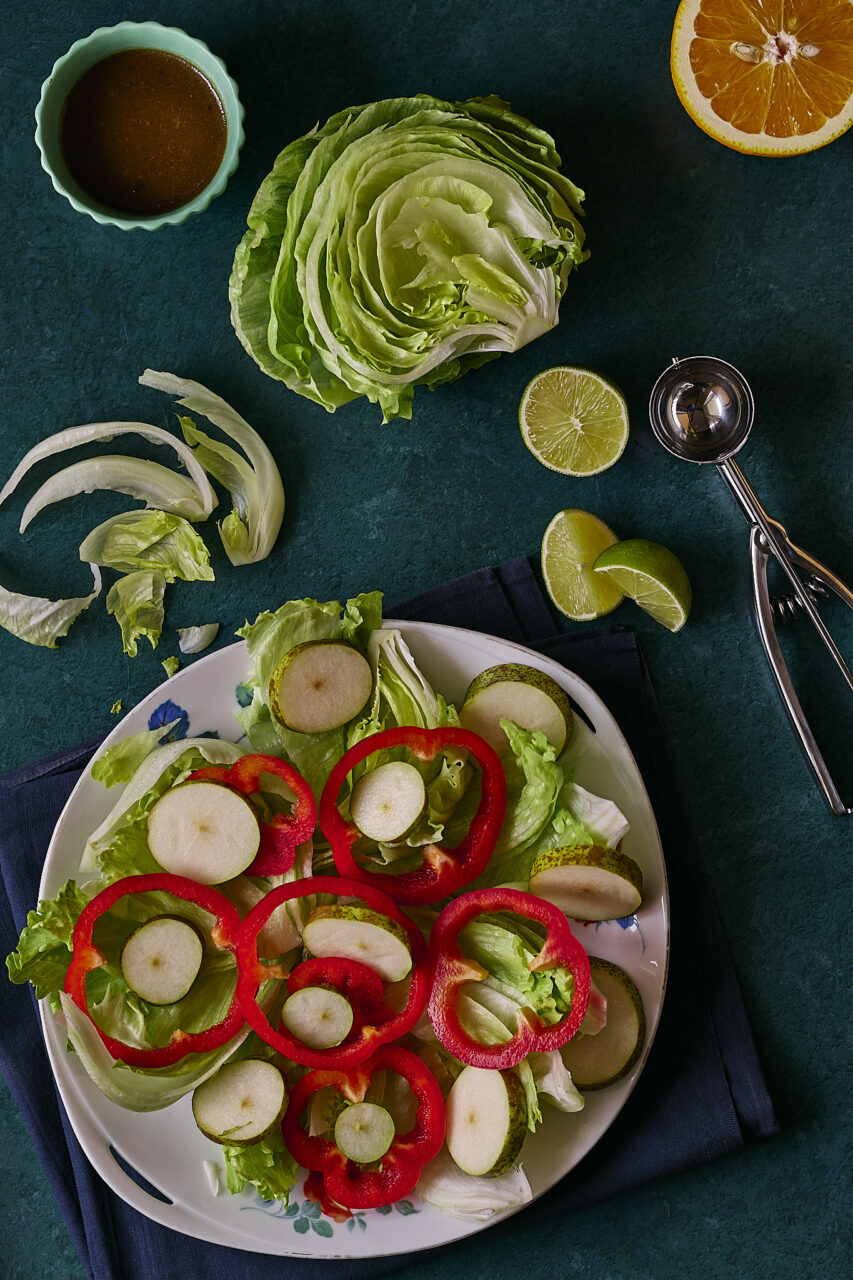
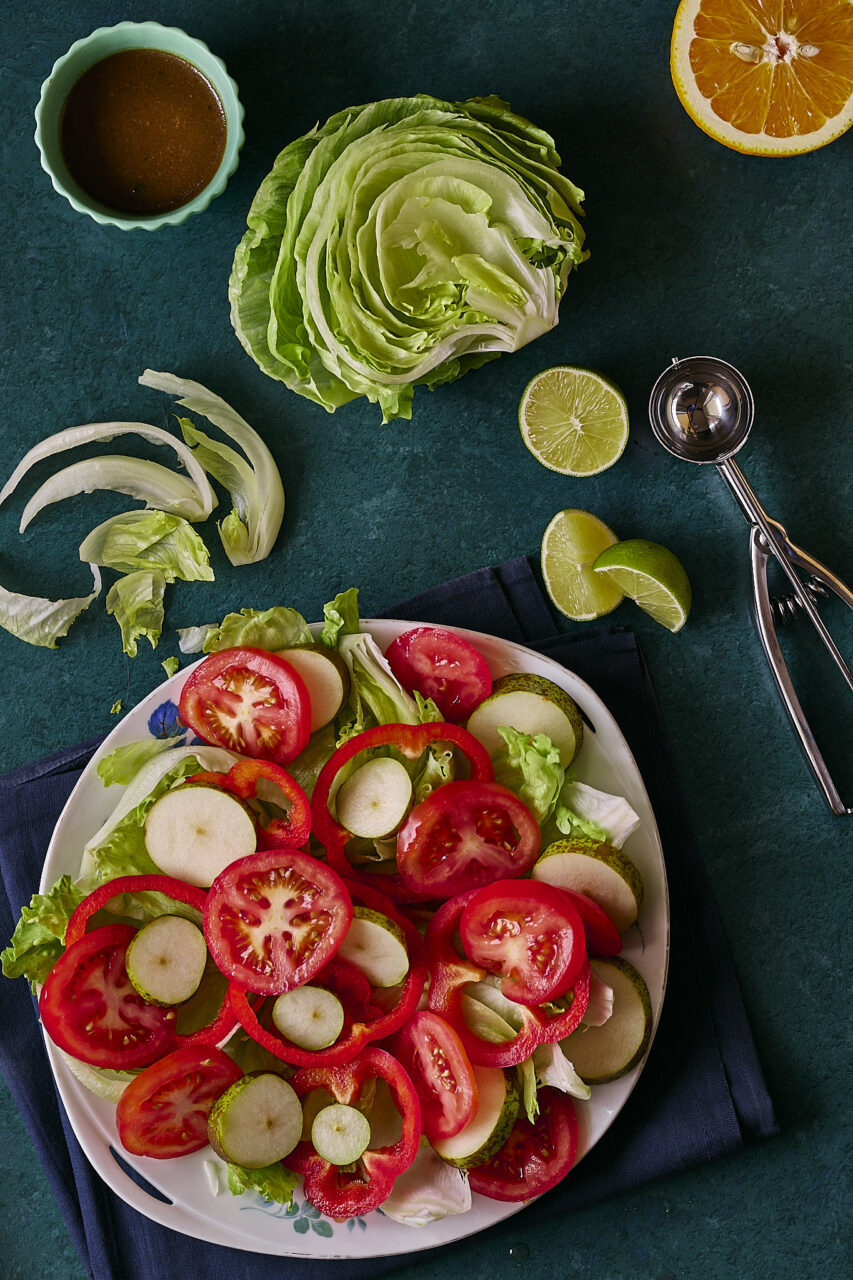
1 — Lettuce base
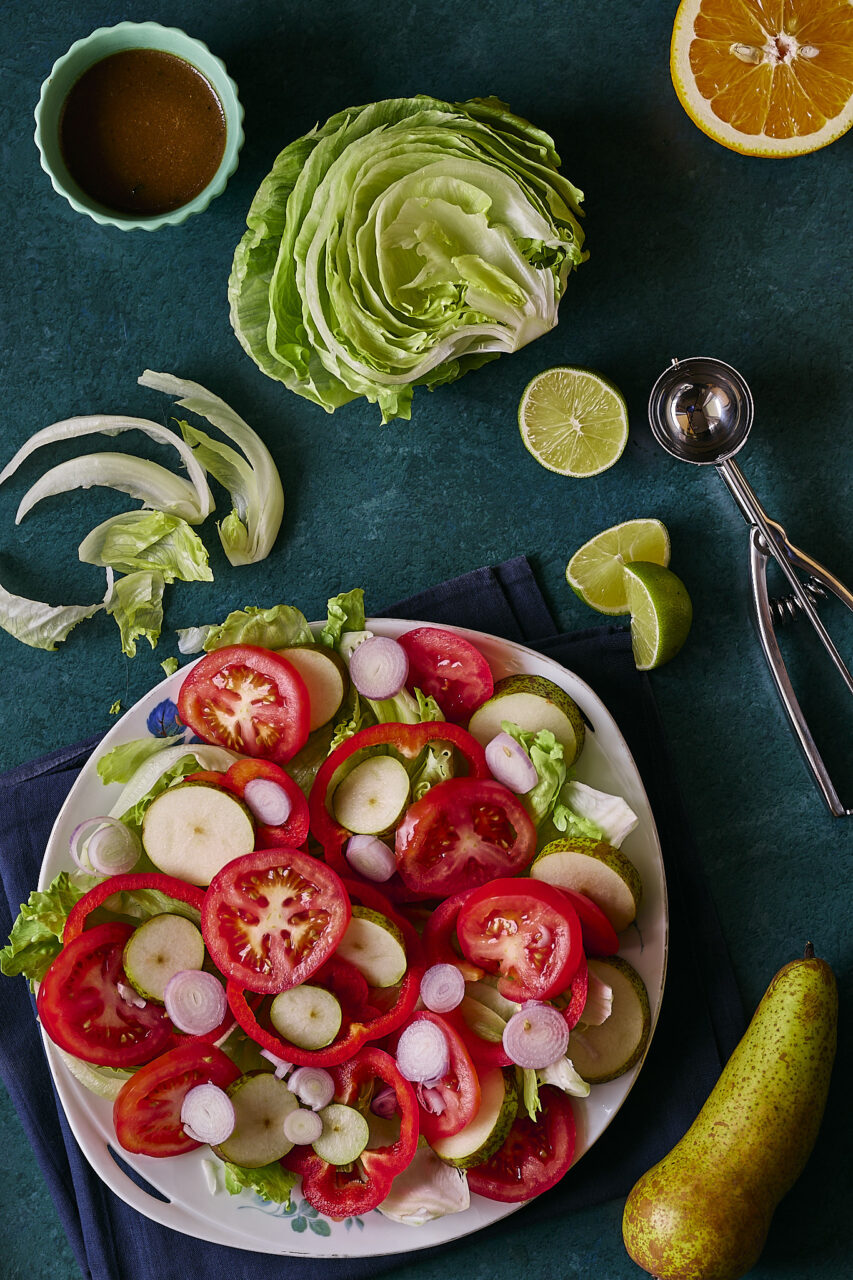
Start with a generous layer of crisp iceberg lettuce leaves, arranged to cover the plate and create a cool, crunchy foundation for everything that follows.
2 — Red bell pepper
Lay the red bell pepper rings over the lettuce, their vivid color already turning the plate into something worth looking at.
3 — Pear
Tuck in the sliced pear, letting its pale, delicate rounds nestle into the bell pepper rings for a first hint of gentle sweetness.
4 — Tomatoes
Add the tomato slices generously across the plate, their deep red juices beginning to mingle with everything beneath them.
5 — Shallot
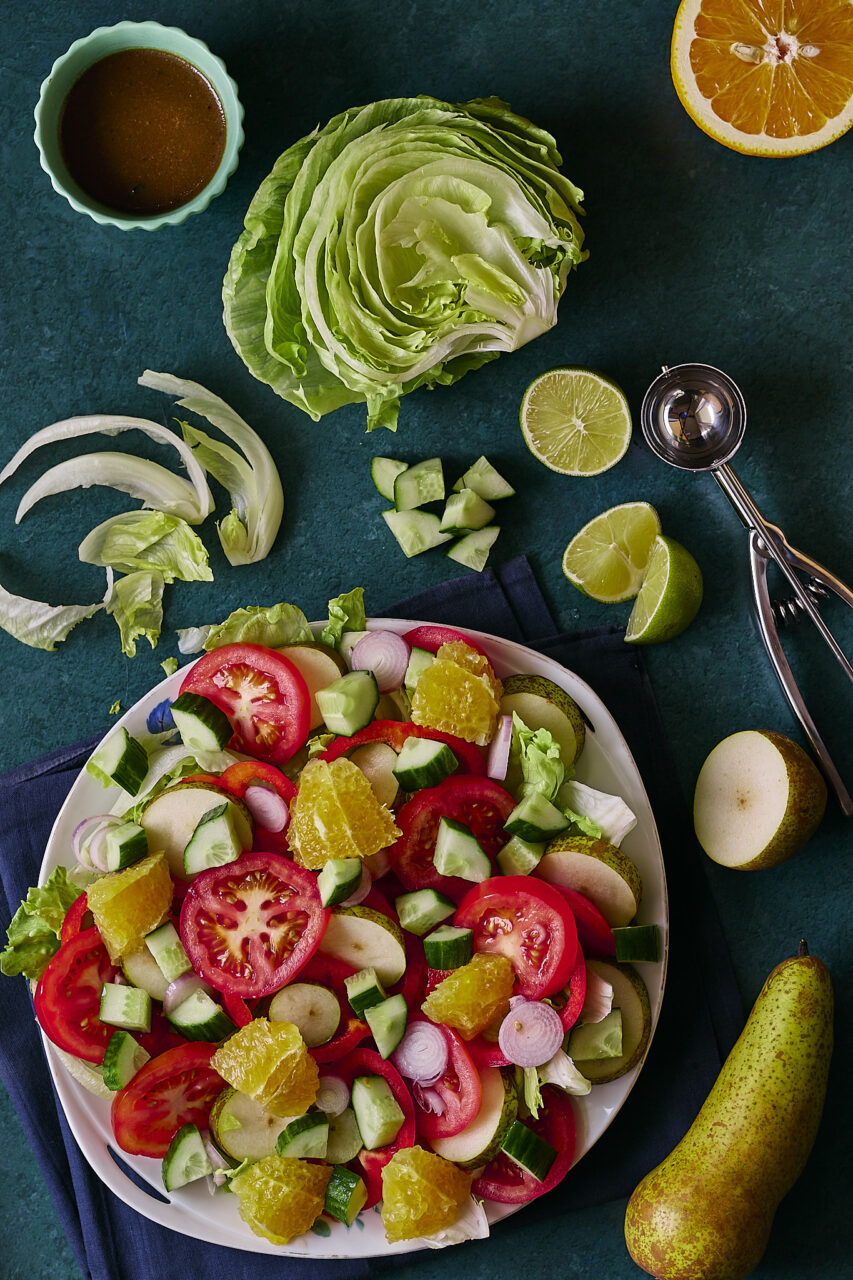
Scatter the shallot rounds across the top, their soft purple rings adding a subtle sharpness that will deepen as the salad sits.
6 — Cucumber and orange
Add the chopped cucumber for crunch and the orange segments for bright, juicy acidity — this is where the salad truly comes together.
7 — Feta scoops and dressing
Finish with generous scoops of soft, creamy feta and a drizzle of the miso dressing — the moment the whole salad transforms into something rich, layered, and complete.
Serving Suggestions
This feta fruit salad is substantial enough to enjoy on its own, but it also pairs beautifully with:
- Grilled chicken
- Roasted salmon
- Crusty artisan bread
- Mediterranean-inspired meals
- Holiday spreads and festive gatherings
- Summer barbecues and outdoor lunches
Its colorful appearance makes it a natural centerpiece for entertaining, while its simple preparation keeps it practical for everyday cooking.
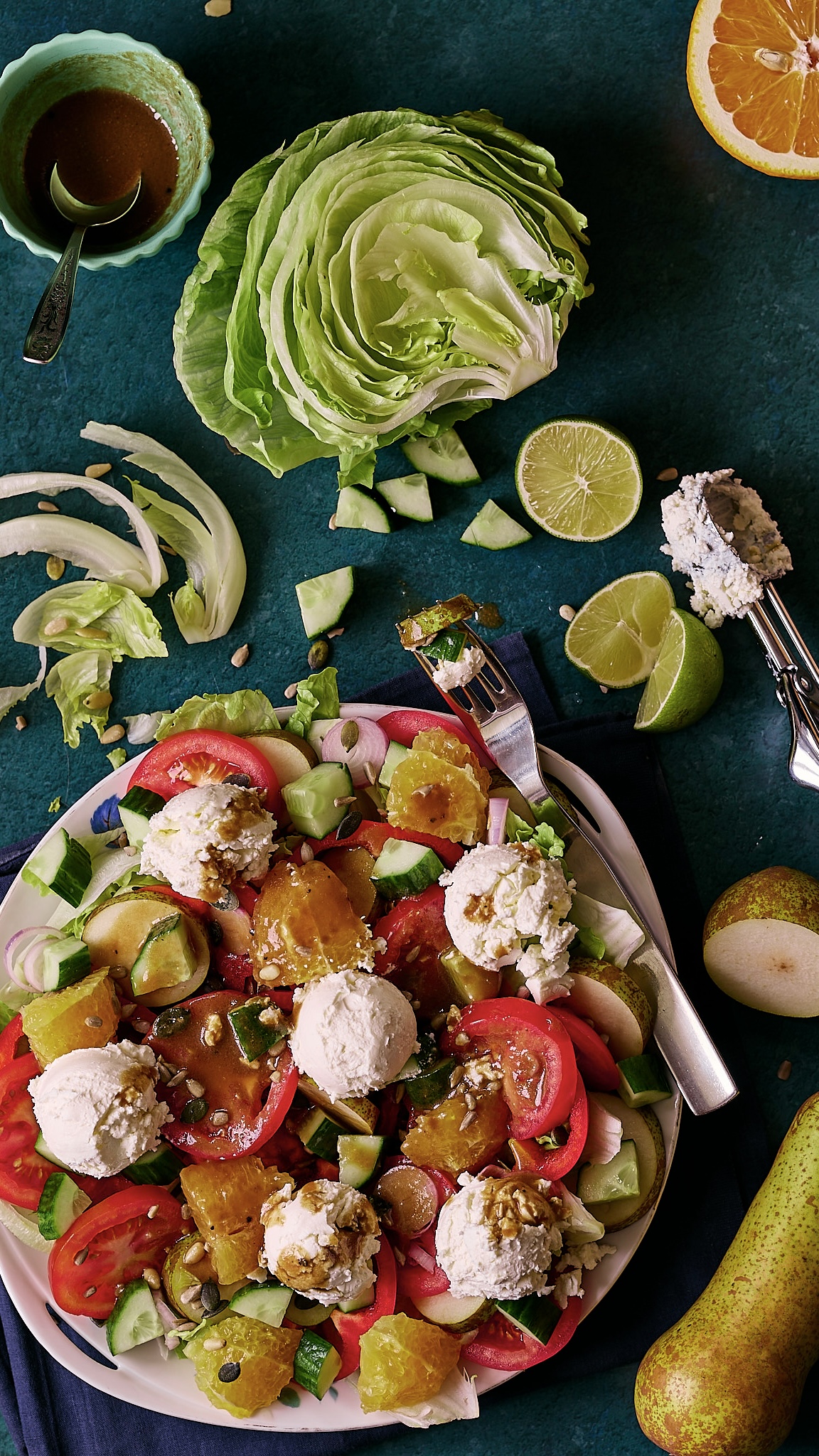
Tomato Cucumber Feta Salad with Fruit and Bell Pepper
Once you try this tomato cucumber feta salad, you’ll likely come back to it again and again — not just because it’s easy, but because it genuinely tastes like something more than the sum of its parts.
4
servings20
minutes0
minutes286
kcal20
minutesPrevent your screen from going dark
Ingredients
1 small head of Iceberg lettuce or romaine lettuce
1 English cucumber
3 yellow plum tomatoes (or 1-2 larger types of yellow tomatoes)
3 red plum tomatoes (or 1-2 larger types of yellow tomatoes)
1 orange or 1/2 grapefruit – most of the white membranes removed (does not have to be perfect)
1 pear (seeds removed)
1/2 red bell pepper, de-seeded and sliced
1/2 yellow bell pepper, de-seeded and sliced
1 Shallot, or 1/2 red onion (if using the onion, then soak it in 2 tbsp red wine vinegar for 5-10 minutes)
300 g soft Feta cheese (see the product recommendations above)
2 tbsp roasted seed mix (optional)
- The Dressing
1 tbsp soy sauce
1 tbsp yellow Miso paste
1 tbsp Teriyaki sauce (optional)
2 tbsp the same red wine vinegar that you used for soaking the onion. If using shallots, then have extra red wine vinegar
1 tsp fish sauce
1/2 lime (only juice)
1 pinch Cayenne pepper
1 tbsp Extra Virgin olive oil (optional, read the recipe description above)

Instructions
- Wash the cucumber, trim the ends, and cut it in half lengthwise, then cut it in half lengthwise again, so you end up with four long quarters. Chop these not too thinly.
- Slice the tomatoes, but not too thinly.
- Slice the bell pepper after de-seeding it (remove the seeds by pushing the stalk end into the bell pepper with your thumb, then pulling all the seeds and fibers out with your fingers; you don’t have to halve the bell pepper to remove the seeds).
- Peel the orange or grapefruit and trim the white fiber layer off each side. Cut it into fairly large cubes.
- Halve the pear and remove the seeds (pears typically have very few seeds).
- Peel and slice the shallot thinly, if using. If using red onion, do the same, and then place the slices into a bath of red wine vinegar. Shallots need no pickling, even though you can do it, of course.
- Add all the liquid ingredients, along with the cayenne, to a small bowl and whisk them together (the miso paste needs a whisk to loosen up). Or even better: use a blender as I do in the video recipe to make it smoother and faster.
- Add the slices of shallot to the bowl of other ingredients and mix.
- Start building the salad layer by layer. Begin by washing the Iceberg or Romain and discarding the bad leaves.
- Place the crispy leaves on a large salad plate.
- Start adding the other veggies one by one. You can choose the order yourself, but fruit should not be added next to each other to create some flavor versatility in every bite.
- Try to spread all the elements evenly on the salad. If necessary, help with your hands, a fork, or tongs.
- Pull 12 beautiful, smaller balls of feta cheese with a small ice cream scoop, or 8 medium ones, or even 4 really large ones with a big scoop. Alternatively, you can use a deep round spoon.
- Place the balls neatly on top of the salad. Shake the dressing one more time if it has separated meanwhile, and pour it over the salad slowly.
- Sprinkle the seeds (if using) over everything.
Recipe Video
Notes
- Storage. Leftovers can be refrigerated in an airtight container for up to one day. The vegetables will soften slightly as they release their juices, but the flavors will continue to develop.
- No soft feta? Mix cream cheese with a spoonful of Greek yogurt and a pinch of salt for a creamy alternative with a similar tangy flavor.
- Choose ripe fruit. A ripe but firm pear and a juicy grapefruit provide the best balance of sweetness and acidity without becoming mushy.
- Taste before serving. Since feta varies in saltiness, adjust the dressing only after combining all the ingredients. You may find the cheese provides all the seasoning you need.
- Don’t skip the dressing. Although it’s light and contains no olive oil, the dressing brightens the vegetables and fruit while allowing the creamy feta to provide the richness.
- Serve immediately. This salad is at its freshest when assembled just before serving, keeping the vegetables crisp and the fruit juicy.
- Use soft feta if possible. Soft, creamy feta is ideal for scooping into large balls or quenelles, creating the signature look of this salad. If you only have traditional block feta, simply cut it into large cubes instead.
- Make it seasonal. For a winter version, replace the grapefruit with oranges and use shallots instead of marinated onions for a milder flavor.
Nutrition Facts
- Serving Size: 1 serving
- Total number of serves: 4
- Calories: 286kcal
- Fat: 20.6g
- Saturated Fat: 10.6g
- Cholesterol: 67mg
- Sodium: 1566mg
- Potassium: 317mg
- Carbohydrates: 13.7g
- Fiber: 1.9g
- Sugar: 6.2g
- Protein: 13.2g
- Vitamin A: 49mcg
- Vitamin C: 66mg
- Calcium: 403mg
- Iron: 1mg
- Vitamin D: 0.3mcg
- Vitamin E: 1mg
- Vitamin K: 18.4mcg
- Thiamin: 0.2mg
- Riboflavin: 0.7mg
- Niacin: 1.5mg
- Vitamin B6: 0.5mg
- Vitamin B12: 1.3mcg
- Folate: 53mcg
- Pantothenic Acid: 1.1mg
- Phosphorus: 304mg
- Magnesium: 40mg
- Zinc: 3mg
- Selenium: 12.3mcg
- Copper: 0.1mg
- Manganese: 0.2mg
Let me know if you made the recipe!
Tag @helenalauralesment on Instagram and hashtag it with #healthycomfortfood
Pin this recipe!
Follow @helenalauralesment on Pinterest
Share the recipe on FB!
Follow Helena-Laura on Facebook
Frequently Asked Questions
Can I make this salad ahead of time?
Yes. Prepare all components separately and assemble shortly before serving for the best texture and freshness. Add the dressing at the very last minute.
What can I use instead of grapefruit?
Orange segments are the easiest substitute and create a slightly sweeter flavor profile.
Can I use regular feta?
Absolutely. Traditional feta works well, although the presentation will be different. Simply cut it into large cubes or blocks.
Is this salad suitable for winter?
Yes. By swapping grapefruit for oranges and using seasonal vegetables, it becomes a wonderful winter salad that feels both fresh and comforting.
Final Thoughts
The reason this salad works so well is that every ingredient contributes something different.
The feta brings saltiness and richness.
The pear contributes gentle sweetness.
The grapefruit provides bright acidity and slight bitterness.
Fresh vegetables add crunch and freshness.
The dressing ties everything together with tang and depth.
Instead of competing, these flavors support one another. Each bite tastes slightly different, which keeps the salad interesting from the first forkful to the last.